What is exactly Importpellet? Guide for Importing wood pellets
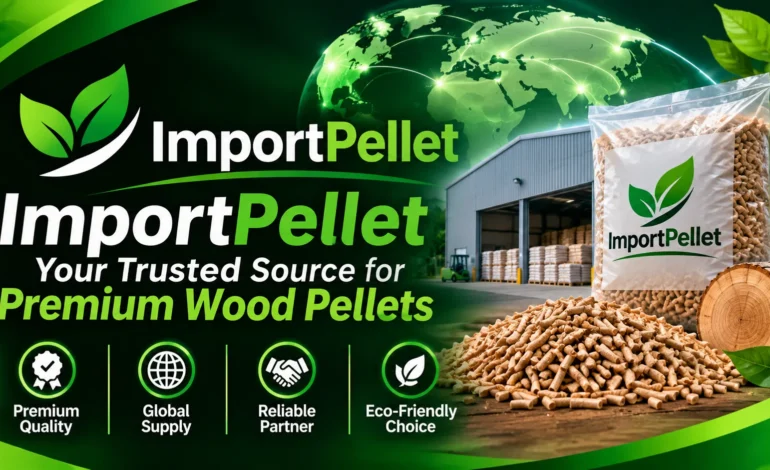
Wood pellets are widely used for residential heating, commercial boilers, and industrial energy production. Made by compressing suitable wood residues, they offer a convenient fuel that can be transported and stored in bags or bulk.
But what happens when a buyer needs wood pellets from another country?
That is where importing begins. Buyers must find suitable suppliers, confirm product quality, arrange international shipping, prepare customs documents, and protect the cargo until delivery.
The term Importpellet is used here as a search phrase related to importing wood pellets. It is not a recognized international trade term, official customs classification, or verified company name. The practical subject behind the search is the wood pellet import process.
This guide explains that process step by step. It also covers supplier checks, quality certification, trade terms, customs clearance, landed costs, and safe storage.
What Does Importpellet Mean?
Importpellet generally refers to importing wood pellets from an overseas supplier into another country.
It is an informal search phrase rather than a formal term used in international shipping regulations. It may also appear in searches for businesses or websites with similar names, but the phrase alone does not establish that any particular company or platform exists.
For buyers, the important questions are practical:
- Where can suitable wood pellet suppliers be found?
- Which quality grade meets the intended use?
- How can an overseas supplier be checked before payment?
- What documents are needed for customs clearance?
- How much will the shipment cost after delivery?
These questions are particularly relevant to fuel distributors, heating businesses, industrial users, and companies purchasing pellets in large quantities.
What Are Wood Pellets, and Why Do Businesses Import Them?
Wood pellets are small cylindrical fuel products made by compressing materials such as sawdust, wood shavings, and other suitable wood residues.
They are commonly used in several applications:
- Residential heating: Pellet stoves and domestic heating boilers.
- Commercial heating: Hotels, factories, warehouses, and other commercial buildings.
- District heating: Centralized systems supplying heat to multiple buildings.
- Industrial energy: Boilers and certain power-generation facilities.
- Specialty cooking: Barbecue pellets manufactured specifically for grilling.
These products are not automatically interchangeable. Residential heating pellets, industrial fuel pellets, and barbecue pellets may have different specifications and intended uses.
Why Import Wood Pellets?
Businesses may import wood pellets when local production cannot meet their requirements or when overseas suppliers offer a suitable product at a competitive delivered cost.
Common reasons include:
- Limited domestic production.
- Seasonal shortages.
- Demand for a particular quality grade.
- Access to larger or more consistent supply volumes.
- Diversification of suppliers.
- Long-term purchasing arrangements.
However, a lower supplier price does not automatically make importing economical. Freight, insurance, customs charges, storage, and inland transport can significantly change the final cost.
Eight Steps of ImportPellet From Supplier to Delivery
A successful shipment requires planning before the purchase order is signed. The following eight steps help buyers manage the main stages.
Step 1: Define Exactly What You Need
Start by identifying the intended use and the quantity required.
Consider these factors:
- Purpose: Residential heating, commercial boilers, industrial energy, or specialty cooking.
- Quality grade: A suitable residential or industrial specification.
- Quantity: A trial shipment, regular container orders, or bulk cargo.
- Packaging: Small bags, large bulk bags, or loose bulk.
- Delivery schedule: The date when the pellets must reach your warehouse or facility.
Your application determines which product specifications matter most.
For example, a household pellet stove may require a particular residential fuel grade. An industrial buyer may prioritize boiler compatibility, consistent quality, and the economics of bulk deliveries.
Ask the equipment manufacturer or operator for the required fuel specifications before requesting supplier quotations.
Step 2: Understand Wood Pellet Quality Standards
Quality is one of the most important parts of an importing decision.
Poor-quality pellets may produce excessive ash, break apart during handling, or cause problems with heating equipment. Moisture, durability, dimensions, and contamination also affect their performance.
One recognized certification scheme is ENplus, which sets requirements for wood pellet quality and parts of the supply chain.
Its main quality classes are:
| Quality class | General description |
| ENplus A1 | Premium class with tighter requirements for several quality parameters and more restricted raw-material requirements |
| ENplus A2 | A class with different permitted raw materials and less stringent limits for certain parameters than A1 |
| ENplus B | A class allowing a broader range of eligible raw materials and different quality limits |
The classes are not simply different names for the same product. Their specifications cover parameters such as moisture, ash, mechanical durability, fines, bulk density, and chemical properties.
For example, the published ENplus specification sets different ash-content limits for A1, A2, and B. Buyers should check the current version of the standard for the complete limits and testing methods.
You can consult the official ENplus quality scheme and certification information to understand the requirements and verification process.
Before purchasing, ask the supplier for:
- A current certificate, if ENplus certification is claimed.
- The company’s certification identification details.
- Recent laboratory test reports.
- Moisture and ash measurements.
- Mechanical durability and fines results.
- Pellet dimensions and bulk density.
- Information about raw materials and production.
Do not rely on a certification logo printed on a quotation or product photograph. Verify the supplier’s certification details through the official scheme.
Also remember that certification does not replace shipment inspection. The delivered cargo must still meet the specifications agreed in your contract.
Step 3: Find and Check Overseas Wood Pellet Suppliers
A competitive quotation does not automatically mean a supplier is dependable.
Before transferring money or signing a contract, investigate the company’s business background, product quality, and export experience.
Check the Company’s Identity
Request the supplier’s:
- Registered legal business name.
- Company registration details.
- Registered business address.
- Official website and business contact information.
- Export or trading license, where applicable.
- References from previous international buyers.
Check the registration through the relevant government business registry where possible. Make sure the company name on the registration matches the name on the quotation and contract.
Verify the Payment Details
Payment fraud can be a serious risk in international trade.
Before paying:
- Confirm that the beneficiary name matches the contracted business or a clearly documented authorized entity.
- Verify bank-account changes through a previously established, independently confirmed contact method.
- Be cautious of requests to pay an unrelated individual or an unexplained third-party account.
- Avoid sending the full purchase amount simply because a supplier offers a discount for immediate payment.
A new supplier should be willing to explain its payment arrangements and provide verifiable business details.
Request Samples and Independent Tests
Ask for representative samples before placing a large order.
For significant purchases, arrange testing through a competent independent laboratory. Where appropriate, use a laboratory accredited to ISO/IEC 17025 for the relevant tests.
The testing should cover the parameters that matter to your application, such as:
- Moisture.
- Ash content.
- Mechanical durability.
- Fines.
- Pellet dimensions.
- Net calorific value.
- Relevant chemical properties.
A supplier’s own laboratory report is useful, but it does not replace independent verification when the purchase involves substantial financial risk.
Consider a Pre-Shipment Inspection
For a large order, arrange an independent inspection before the cargo leaves the production facility.
Agree on the inspection procedure in advance. It should identify:
- The sampling location and method.
- The number of samples.
- The tests to be performed.
- Acceptable quality limits.
- Packaging and quantity checks.
- How samples will be sealed, labeled, and retained.
The inspection should use a representative sample from the actual shipment, not simply a sample selected separately by the supplier.
For a first purchase, a smaller trial shipment can also help assess product quality, packaging, documentation, and delivery performance.
Step 4: Agree on the Contract and Shipping Terms
Once you have selected a supplier, put the commercial agreement in writing.
The contract should specify:
- Product description and quality grade.
- Technical specifications and permitted tolerances.
- Total quantity and acceptable weight variation.
- Price and currency.
- Packaging and loading requirements.
- Delivery schedule.
- Inspection and testing arrangements.
- Payment conditions.
- Responsibility for non-conforming or damaged goods.
- Procedures for resolving disputes.
Pay particular attention to the delivery term.
International businesses often use Incoterms, which allocate responsibilities, costs, and risk between the seller and buyer.
Two common terms are CIF and FCA.
CIF — Cost, Insurance and Freight
Under CIF, the seller arranges and pays for carriage and the required minimum insurance to the named destination port.
However, risk transfers to the buyer when the goods are loaded on board the vessel at the port of shipment. The seller paying for freight and insurance does not mean the seller carries the transit risk until the cargo arrives.
CIF is intended for sea and inland waterway transport.
FCA — Free Carrier
Under FCA, the seller delivers the goods to the buyer’s nominated carrier at the agreed place. Risk transfers when delivery takes place according to the FCA rule.
The seller generally handles export clearance, while the buyer arranges the main carriage unless the parties agree otherwise.
FCA can be useful for containerized and multimodal shipments.
Always specify the named place or port and the applicable Incoterms edition in the contract. Do not compare CIF and FCA quotations without accounting for the different responsibilities and cost arrangements.
Step 5: Prepare the Import Documents
Accurate paperwork helps prevent customs delays and unexpected charges.
A typical wood pellet shipment may involve the following documents:
| Document | Purpose |
| Commercial invoice | Shows the seller, buyer, product description, quantity, and price |
| Packing list | Describes packaging, weights, and shipment contents |
| Bill of lading | Provides evidence of the sea-carriage contract and receipt of goods |
| Certificate of origin | Identifies the origin of goods where required |
| Quality certificate | Records relevant product specifications or test results |
| Insurance certificate | Provides evidence of cargo insurance when applicable |
| Import permit or license | Required for certain products or destinations |
| Plant-health documentation | Required only where the destination’s rules apply |
| Sustainability documents | May be required by particular markets, buyers, or regulatory schemes |
Not every shipment requires every document. Requirements depend on the importing country, product characteristics, origin, and intended use.
For example, do not assume that a phytosanitary certificate is universally required for all wood pellets. Check the importing country’s plant-health rules before shipping.
What HS Code Applies to Wood Pellets?
Wood pellets are generally classified under HS code 4401.31 in the international Harmonized System.
This is the six-digit international subheading for wood pellets under the broader classification covering fuel wood, wood waste, and related products.
However, national tariff schedules may add further digits to identify more specific product categories. Import duties and taxes also depend on the destination country, trade agreements, and applicable regulations.
Before shipment, confirm:
- The complete national tariff code.
- Customs duty and applicable taxes.
- Import restrictions or permits.
- Any origin-based trade preferences.
- Product-specific inspection requirements.
The World Customs Organization advises traders to consult the customs administration of the importing or exporting country for classification assistance. A licensed customs broker can also help confirm the applicable code.
Never assume that a duty rate or tariff extension used in one country applies to another.
Step 6: Arrange Shipping and Cargo Insurance
The shipping method depends on order size, packaging, destination, and delivery schedule.
Smaller and medium-sized orders may be transported in containers. Larger industrial purchases may use bulk vessels.
Before booking transport, confirm the following.
Packaging and loading
Wood pellets must be protected from rain, condensation, and other sources of moisture. Discuss suitable bags, liners, container preparation, and loading procedures with the supplier and freight forwarder.
Container capacity
Do not assume that every 40-foot container can carry the same quantity. The actual load depends on the container’s permitted payload, packaging, cargo density, loading arrangement, and road or port restrictions.
Ask the shipping company to confirm the approved loading weight before finalizing your order.
Cargo insurance
International transport exposes goods to risks such as water damage, handling damage, and loss. Confirm what the policy covers, which party arranges it, and whether the coverage is sufficient for the shipment’s value.
Under CIF, the seller provides the insurance required by the rule. Buyers who need broader protection should review the policy and consider whether additional coverage is necessary.
Port arrangements
Confirm the expected arrival port, terminal charges, unloading facilities, and availability of onward transport.
A shipment can become expensive if storage or collection has not been arranged before the vessel arrives.
Step 7: Clear Customs and Arrange Final Delivery
When the cargo reaches the destination, the importer must complete the required customs procedures.
A customs broker can help prepare declarations, check documents, calculate duties, and respond to inspection requests.
Depending on the country, customs authorities may examine the paperwork, inspect the goods, or request additional information.
Before shipment, establish who will handle:
- Import declarations.
- Customs duties and taxes.
- Port and terminal charges.
- Inspection fees.
- Customs broker fees.
- Container collection and return.
- Transport from the port to the warehouse.
Arrange inland transport in advance. Delays in collecting a container can result in storage, demurrage, or detention charges.
Step 8: Inspect the Shipment and Store It Properly
When the pellets arrive, inspect them against the purchase contract and shipping documents.
Check for:
- Damaged or torn bags.
- Signs of water exposure.
- Unusual moisture levels.
- Excessive dust or broken pellets.
- Differences in quantity or packaging.
- Visible contamination.
If the contract includes an independent inspection or sampling procedure, follow it carefully.
Photograph any visible damage and notify the relevant parties within the contract’s reporting period. Keep copies of inspection reports, test results, delivery records, and correspondence.
Once the shipment has been checked, move the pellets into suitable storage.
How to Calculate the Landed Cost of Imported Wood Pellets
The supplier’s quoted price is only one part of the total import expense.
The landed cost is the cost of bringing the product to the agreed destination, including relevant transport, insurance, duties, handling, and other charges.
Use this checklist when preparing your budget.
| Cost item | What to include |
| Product price | Price per tonne and whether packaging is included |
| Origin transport | Delivery from the production facility to the export port |
| Export charges | Origin port handling and export documentation |
| International freight | Container or bulk shipping charges |
| Cargo insurance | Insurance premium and coverage |
| Import duty and taxes | Applicable customs duties, VAT, sales tax, or other charges |
| Destination port fees | Handling, inspection, and terminal charges |
| Customs broker | Declaration and clearance fees |
| Destination transport | Delivery from the port to the warehouse |
| Storage and handling | Warehouse space, labor, and unloading equipment |
| Currency exchange | Conversion costs and exchange-rate changes |
| Additional expenses | Demurrage, detention, testing, and unexpected charges |
Practical Landed Cost Example
Imagine a business imports 500 tonnes of wood pellets. The following figures are hypothetical and are used only to demonstrate the calculation.
| Expense | Cost per tonne |
| Product price | $220 |
| Origin transport and export charges | $25 |
| International freight | $55 |
| Cargo insurance | $2 |
| Import duty and taxes | $30 |
| Destination port and customs charges | $18 |
| Inland delivery | $20 |
| Estimated landed cost | $370 |
The calculation is:
$220 + $25 + $55 + $2 + $30 + $18 + $20 = $370 per tonne
For 500 tonnes:
500 × $370 = $185,000 total estimated landed cost
This example excludes any additional costs not listed, such as long-term warehouse rental, financing charges, or unexpected inspection expenses. Tax treatment also varies by country. For example, recoverable VAT may affect cash flow without necessarily becoming a permanent product cost.
The purpose of the calculation is to compare the complete cost, not just the supplier’s price.
How to Compare Supplier Quotations Fairly
A lower price per tonne does not always mean a cheaper shipment.
For a useful comparison, make sure every supplier quotation uses the same:
- Product grade and technical specifications.
- Quantity and packaging.
- Delivery destination.
- Incoterms rule and named location.
- Currency and payment terms.
- Inspection requirements.
- Delivery period.
For example, one supplier may quote a low FOB price while another offers a CIF price that includes freight and insurance. These figures are not directly comparable without adding the missing costs.
Request a detailed cost breakdown and calculate the expected landed cost for each option.
Common Importpellet Mistakes to Avoid
New importers can reduce financial and operational risks by avoiding these common mistakes.
- Choosing the cheapest supplier: A low price may hide poor quality, unreliable delivery, or additional charges.
- Skipping supplier verification: Confirm the company’s identity, registration, references, and payment details before transferring money.
- Ignoring independent testing: A supplier’s own laboratory report may not represent the actual shipment.
- Misunderstanding Incoterms: Buyers may assume the seller carries risks that have already transferred under the agreed rule.
- Overlooking customs requirements: Missing documents or incorrect tariff classifications can delay clearance.
- Ignoring moisture protection: Wet pellets can swell, break apart, and lose their usefulness as fuel.
- Forgetting seasonal demand: Heating-season demand can affect availability, prices, and shipping schedules.
- Failing to plan storage: Pellets need suitable dry storage, and large enclosed stores require additional safety precautions.
- Ordering too much initially: A trial shipment can reveal quality and logistics problems before a larger commitment.
How to Store Imported Wood Pellets Safely
Proper storage protects product quality and helps prevent serious safety hazards.
Wood pellets are sensitive to moisture. They can absorb water, swell, and break apart, making them difficult to handle and use.
Keep Pellets Dry
Store bags in a covered, dry location. Keep them away from leaking roofs, standing water, damp floors, and direct exposure to rain.
Use suitable pallets or raised storage arrangements to prevent contact with wet surfaces.
Reduce Dust and Pellet Breakage
Repeated movement can create fines and dust. Use suitable handling equipment and avoid unnecessary dropping, crushing, or rough transportation.
Clean accumulated dust regularly using appropriate industrial housekeeping procedures.
Understand Carbon Monoxide Risks
Wood pellets can release carbon monoxide during storage. The gas is colorless and odorless, and dangerous concentrations may develop in enclosed storage areas.
Never enter a pellet silo, hopper, or poorly ventilated storage room without appropriate confined-space procedures. Safe entry requires proper ventilation, atmospheric testing, and trained personnel.
The UK Health and Safety Executive provides specific safety guidance on carbon monoxide risks from stored wood pellets.
Control Fire and Dust Hazards
Wood pellet dust is combustible. If fine dust becomes suspended in air at a sufficient concentration and meets an ignition source, a dust explosion can occur under suitable conditions.
Keep ignition sources away from storage and handling areas. Follow suitable dust-control procedures, maintain equipment, and ensure workers understand the relevant safety rules.
Large storage facilities should have a documented risk assessment and suitable operating procedures.
Rotate Your Inventory
Use older stock before newer deliveries where practical. This helps maintain orderly inventory management and reduces the risk of long-term storage problems.
Frequently Asked Questions About Importpellet
What does Importpellet mean?
Importpellet is used here as a search phrase for importing wood pellets from another country. It is not a formal international shipping or customs term.
Is Importpellet a company or website?
The phrase alone does not identify a verified company or website. It may appear in searches for different businesses, but this guide covers the general wood pellet import process.
What types of wood pellets are imported?
Common imports include residential heating pellets, industrial fuel pellets, and specialty barbecue pellets. Each type has different quality and intended-use requirements.
What is the difference between ENplus A1, A2, and B?
They are three wood pellet quality classes under the ENplus scheme. They differ in permitted raw materials and technical limits for properties such as ash, moisture, and durability. Buyers should check the current certification specifications before purchasing.
What HS code is used for wood pellets?
The international six-digit HS subheading is generally 4401.31. The complete national tariff code and applicable duties must be confirmed with the importing country’s customs authority.
How much does it cost to import wood pellets?
The total depends on product price, quantity, packaging, freight, insurance, duties, taxes, port charges, and inland transport. Calculate the complete landed cost before placing an order.
How many wood pellets fit in a shipping container?
There is no single guaranteed quantity. Loading capacity depends on the container’s payload limit, packaging, cargo density, and transport restrictions. Ask the shipping company to confirm the permitted weight.
What documents are needed to import wood pellets?
Common documents include a commercial invoice, packing list, and bill of lading. A certificate of origin, quality reports, permits, plant-health documents, or sustainability records may also be required, depending on the destination.
How can I avoid receiving poor-quality pellets?
Check the supplier’s background, verify certification, request samples, arrange independent testing, agree on quality tolerances, and establish inspection rights in the contract.
Is importing wood pellets worthwhile for a household?
Usually, direct importing is less practical for a household buying small quantities. Local suppliers are often simpler because they handle bulk purchasing, transport, and storage.
Final Thoughts
Importpellet is best understood as a search phrase for the process of importing wood pellets, not as an official trade term or a verified business name.
A successful wood pellet import begins with choosing the right product and checking the supplier carefully. Buyers also need to understand quality certification, agree on clear trade terms, prepare customs documents, and protect the shipment during transport.
Most importantly, calculate the full landed cost before making a purchase. A low supplier price may not remain competitive after freight, insurance, duties, handling, and inland delivery are included.
For new importers, a smaller trial shipment and independent quality inspection can help identify problems before committing to larger orders. With careful planning, clear contracts, and suitable storage arrangements, importing wood pellets can become a more predictable part of a fuel supply operation.
You may also read: PressVibePulse.com