What Is a VPN and Do You Really Need One? (2026)
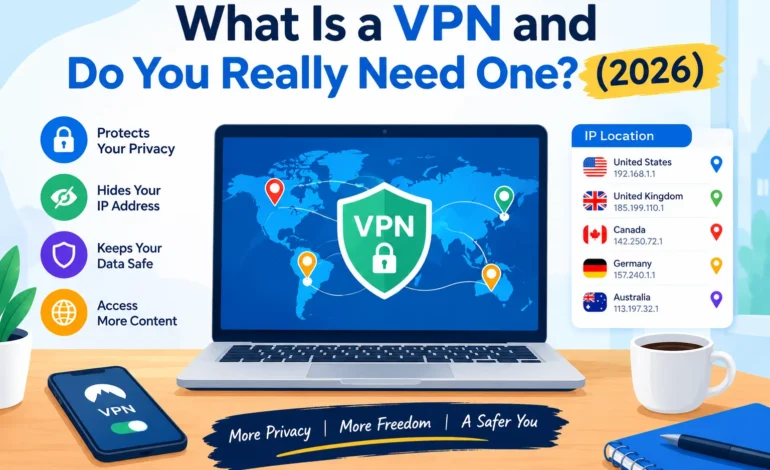
You have probably seen ads promising that a VPN makes you “anonymous” and “unhackable.” Those claims go too far. So what is a VPN, what does it really do, and who benefits? Magazines Insights explains VPNs, covers the real benefits and limits, and helps you decide if you need one.
Table of Content
Quick Overview
- A VPN (virtual private network) encrypts your internet traffic and hides your IP address from the sites you visit.
- It helps most on public Wi-Fi and when you want to hide activity from your internet provider.
- It does not make you anonymous, and it does not stop all tracking or malware.
- Your VPN provider can see your traffic, so trust matters.
What is a VPN?
VPN stands for Virtual Private Network. A VPN creates an encrypted connection between your device and a server run by the VPN provider. Your traffic travels through that tunnel before reaching the website. Websites see the VPN server’s IP address instead of yours, and your internet provider sees only encrypted data going to the VPN.
Think of it as sending your mail inside a locked box through a trusted courier, instead of on an open postcard.
How does a VPN work?
- You turn on the VPN app.
- Your device connects to a VPN server and encrypts your data.
- The server forwards your request to the website.
- The website replies to the server, which sends the data back to you through the tunnel.
What a VPN can do?
- Protect you on public Wi-Fi. Encryption makes it harder for others on the same network to snoop.
- Hide your IP address from websites and some trackers.
- Keep your browsing private from your internet provider or network admin.
- Help you access content in another region, where doing so is legal and allowed by the service’s terms.
What a VPN cannot do?
- It cannot make you fully anonymous. Logins, cookies, and browser fingerprints still identify you.
- It cannot stop phishing, malware, or scams.
- It does not replace strong passwords and two-factor authentication.
- It can slow your connection a little.
- It does not make illegal activity legal.
Do you need a VPN?
| Situation | VPN helpful? |
| Using café, airport, or hotel Wi-Fi often | Yes |
| Working remotely with sensitive files | Yes, especially if your employer requires one |
| Home use with secure sites only (HTTPS) | Optional |
| Wanting to stop all online tracking | No, a VPN alone is not enough |
| Traveling to countries with internet restrictions | Possibly, but check local laws first |
Most websites now use HTTPS, which already encrypts data between you and the site. That reduces the risk on public Wi-Fi, but a VPN still adds protection from network-level snooping.
Free vs paid VPNs
Free VPNs can be risky. Some limit data, show ads, or collect and sell your browsing data. Reputable paid services usually publish clear privacy policies and independent audits. Be careful with unknown free apps.
How to choose a VPN
Look for:
- A clear no-logs policy, ideally independently audited
- Strong encryption and modern protocols
- Servers in the countries you need, such as the US and UK
- A kill switch that blocks traffic if the VPN drops
- Fair, transparent pricing and a refund window
- Good speeds on your own internet connection
Is using a VPN legal?
In the US and UK, using a VPN is legal. Some countries restrict or ban VPNs, and streaming services may limit VPN use in their terms. Check the rules where you live or travel.
FAQ
Does a VPN make you anonymous?
No. It hides your IP address, but other tracking methods can still identify you.
Does a VPN protect you from hackers?
It helps on untrusted networks, but it does not stop phishing or malware.
Will a VPN slow my internet?
Sometimes slightly, depending on the provider and server distance.
Are free VPNs safe?
Some are, but many make money from your data. Read the privacy policy first.
Do I need a VPN at home?
Usually it is optional. It matters more on public Wi-Fi or for added privacy from your internet provider.
Conclusion
A VPN is a useful privacy tool, not a magic shield. It shines on public Wi-Fi and for hiding traffic from your network, but you still need strong passwords, two-factor authentication, and careful browsing habits.