ALPR Technology and Smart Device Tracking | Smart Cameras That Track Vehicles
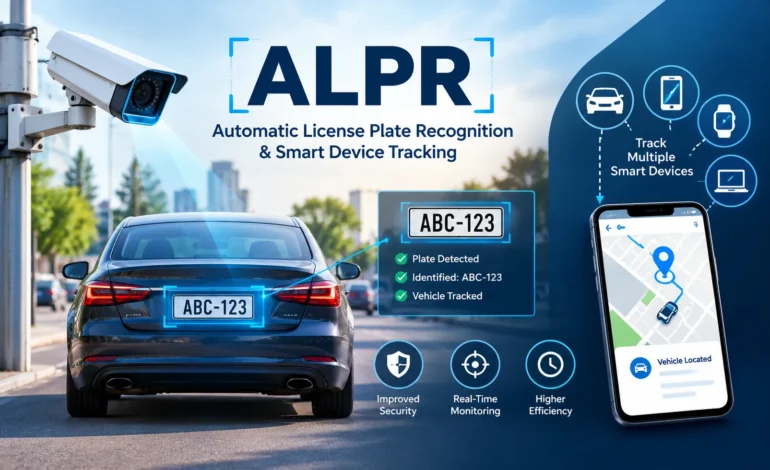
Cameras now watch roads, parking lots, and neighborhood entrances across America. Many of them run ALPR technology. These smart devices read license plates in a split second. They also log where and when each car appears.
Magazines Insights tells how ALPR works, who uses it, and what it means for your privacy. You will also see accuracy limits, the legal picture, and steps you can take as a driver or homeowner.
What Is ALPR Technology?
ALPR stands for automated (or automatic) license plate recognition. You may also see the term license plate reader (LPR). An ALPR system is a camera and software package that captures a vehicle’s plate, reads the characters, and stores the result.
The U.S. Department of Homeland Security says law enforcement uses these systems to compare plates against vehicles linked to suspected illegal activity. Each scan can include the plate number, a photo, the date, the time, and the location.
How Does ALPR Work?
The process follows five steps.
- Capture. High-resolution cameras photograph passing plates. Many use infrared lighting, so they work day and night.
- Image processing. Software adjusts contrast and sharpness to isolate the plate.
- Character reading. Optical character recognition (OCR) turns the image into text.
- Database check. The system compares the plate with a hot list. Hot lists can include stolen vehicles, warrants, and Amber Alerts.
- Storage and alerts. A match triggers an alert, called a hit. Plates that do not match often stay in the database too.
That last point matters. Systems often store scans of ordinary drivers who did nothing wrong.
Types of ALPR Cameras
| Type | Where you find it | Typical use |
| Fixed | Light poles, overpasses, road signs, neighborhood entrances | Tolling, traffic studies, neighborhood security |
| Mobile | Patrol cars and parking enforcement vehicles | Patrol, stolen vehicle searches, parking checks |
| Concealed | Hidden in objects, such as fake cacti in one Arizona town | Covert surveillance |
| Trailer or van mounted | Temporary posts | Events and special operations |
Why Call It “Smart Device Tracking”?
Modern plate readers act as connected smart devices. They send data over networks to cloud databases. Software then searches, maps, and shares that data. Investigators can pull up a car’s past movements. Some systems can even predict where a car may appear next. Vendors increasingly add artificial intelligence to flag patterns and vehicle features.
This guide covers plate readers on vehicles. It does not cover phone location tracking, which works through different technology.
Who Uses ALPR Technology?
Law Enforcement
Police use plate readers to find stolen cars, wanted suspects, and missing persons. A California audit found 230 of 391 surveyed agencies used ALPR, and 36 more planned to. A 2013 federal report found 77% of large police departments used it.
Toll Roads and Traffic Agencies
Toll systems read your plate and bill your account without a stop. Traffic agencies also study flow and congestion with the same data.
Parking Operators and Cities
Garages and cities use plate readers for ticketless entry, payment, and permit checks. Parking enforcement vehicles scan plates as they drive.
Businesses and Neighborhoods
Banks, insurers, and repossession firms use plate data. Homeowner associations now install cameras at entrances and exits. One Sacramento County neighborhood bought nine cameras to cover every entry point.
Major Vendors
Two large vendors dominate the US market. Motorola Solutions says it holds over 44 billion plate records. Flock Safety, a venture-backed startup, sells to both public and private customers. Both claim to serve thousands of communities.
Benefits of ALPR Technology
Supporters point to real public safety gains.
- Faster recoveries. A 2011 Mesa, Arizona study found about three times as many stolen-vehicle hits as manual checks.
- Solved cases. Police credit plate readers in arrests tied to murders, carjackings, and robberies.
- Wichita trial. One four-month trial led to 156 arrests, 23 recovered guns, and 152 recovered vehicles, according to one report.
- Time savings. Cameras scan thousands of plates per minute, far faster than an officer.
- Smoother travel. Tolling and parking systems cut waits.
- Safer neighborhoods. Some residents feel safer with entry cameras.
Vendors also make bold claims about crime reduction. One company reports a 70% drop in its customers’ markets. Those claims come from the company itself, and independent studies have not confirmed them.
ALPR in Action: A Simple Example
A stolen car passes a plate reader on a city street. The camera reads the plate and finds a match on the hot list. An alert goes to nearby officers within seconds. They locate the car before the thief gets far. The system works best when the hot list is accurate and current.
ALPR Privacy Concerns
Critics worry about what happens to all that data. Plate readers log every car they see, not only suspects.
- Movement history. Stored scans can reveal where you live, work, worship, and travel.
- Little payoff for most scans. A Maryland ACLU report found only 47 of every million plates scanned had a possible link to a serious crime. Minnesota reported that 0.05% of about 1.7 million scans led to an arrest or citation.
- Long storage. Many places set no retention limit, so agencies can keep scans for years.
- Wide data sharing. A California audit found about 84% of agencies with ALPR shared images with others. One Sacramento department shared data with over 1,000 agencies, per a later audit finding.
- Misuse by insiders. Reports describe officers who searched databases for personal reasons. In 2022, Wichita revoked department-wide access to one vendor’s system after a lieutenant’s arrest for stalking his ex-wife.
- Uneven placement. Researchers have found some departments placed cameras more often in minority neighborhoods.
- Sensitive trips. Advocates warn that plate data could trace trips to clinics, houses of worship, or protests.
How Accurate Is ALPR Technology?
Plate readers are fast, but they make mistakes.
- One vendor guide says modern systems can exceed 95% accuracy under good conditions.
- A 2019 estimate placed accuracy near 90%, so about one in ten reads could be wrong.
- A randomized trial found 37% of sampled stationary-camera hits were misreads.
- Dirty plates, glare, speed, and odd fonts reduce accuracy.
- Out-of-date hot lists can flag the wrong car.
Errors carry real risk. In 2009, officers in San Francisco stopped a woman at gunpoint after a reader flagged her car as stolen. A stop based on a bad read can turn dangerous fast.
ALPR Laws in the United States
No federal law governs ALPR use. States set their own rules, and many have none.
| Topic | What reports say |
| Federal law | No general federal ALPR statute |
| State laws | About 16 states had some ALPR rules as of a 2023 review |
| New Hampshire | Requires plate records to be destroyed within minutes unless a hit occurs |
| Colorado | Allows passive images for up to three years |
| California | Requires a public usage and privacy policy; the Highway Patrol limits retention to 60 days |
| Courts | The Supreme Court has not ruled on warrants for historical ALPR searches |
In Carpenter v. United States (2018), the Supreme Court required a warrant for historical cell-site location data. Courts have not clearly extended that ruling to plate data. In Kansas v. Glover (2020), the Court said a plate check showing a revoked license can justify a traffic stop.
Laws change fast. Check your state’s current rules.
How to Protect Your Privacy Around ALPR
You cannot hide your plate. Obscuring a plate is illegal in most places. You can use lawful steps instead.
- Learn your state’s rules. Search your state legislature’s site for ALPR laws.
- Ask your agency. File a public records request for your local ALPR policy, retention period, and sharing list.
- Attend meetings. City councils often vote on camera contracts. Public comment matters.
- Ask your HOA or property manager. Find out who owns the data and how long they keep it.
- Request your own data where allowed. Some states let you ask for records tied to your plate.
- Support clear policies. Backing retention limits, audits, and warrant rules helps everyone.
- Report errors. If a system flags you wrongly, contact the agency right away and keep records.
What Good ALPR Policy Looks Like
Researchers suggest these safeguards for agencies that use plate readers:
- Delete non-matching scans quickly.
- Require a warrant for historical searches.
- Publish policies on camera locations, sharing, and retention.
- Audit every search, including reason, officer, and time.
- Verify every hit by eye before a stop.
- Review hot lists often to remove outdated entries.
ALPR for Businesses and Homeowners
Thinking of installing plate readers? Ask these questions first.
- Who owns the footage and plate data?
- How long does the vendor store it?
- Can the vendor share it with police or third parties?
- Does your state require notice or limit private use?
- What happens if residents or visitors object?
Put your answers in a written policy. Post clear signs.
Frequently Asked Questions
What does ALPR stand for?
ALPR stands for automated or automatic license plate recognition. People also call it license plate reader technology.
How does ALPR technology work?
Cameras capture plates, software reads the characters, and the system checks a database. It then stores the scan and can send alerts.
Is ALPR legal in the US?
Most places allow it. States regulate it differently, and no federal law covers it.
Do ALPR cameras track my phone?
No. They read license plates on vehicles. Phone tracking uses different technology.
How long do police keep ALPR data?
It varies widely. Some states limit storage, and others set no limit.
How accurate are license plate readers?
Accuracy depends on conditions and equipment. Reports range from about 90% to above 95%, but misreads happen.
Can ALPR data be shared with other agencies?
Yes. Many agencies share data, sometimes with hundreds or thousands of others.
Can I opt out of ALPR scanning?
Generally no. You can ask for transparency and push for stronger local rules.
Who makes ALPR systems?
Large vendors include Motorola Solutions and Flock Safety. Others serve parking and tolling markets.
Final Thoughts
ALPR technology helps police recover stolen cars and solve crimes. It also builds large maps of ordinary people’s movements. Both facts matter. Learn how your community uses plate readers, ask smart questions, and support clear rules. Share your thoughts in the comments below.