Home Renovations
Smart home renovations start with a budget, a priority list and the right contractor. Magazines Insights is here to help you out by providing home renovation ideas, it’s best contrators, and step by step checklist.
What is the Difference between Remodeling and Renovating a house?
Renovating restores or refreshes what already exists. Remodeling changes a space’s form, function or layout. Examples of Renovating includes repainting, refinishing floors and replacing worn fixtures. Examples of Remodeling is moving walls, enlarging a kitchen or converting a basement.
What Is the 30% Rule for Renovations?
The 30% rule says total renovation spending should stay at or below 30% of your home’s current value. A $400,000 home gets a $120,000 limit.
Home Renovation Ideas That Add Value
The best home renovation ideas combine curb appeal, kitchens and baths, and comfort upgrades. The 2025 Cost vs Value Report tracks 28 projects. Its national averages show what each costs and how much of that cost a seller recoups.
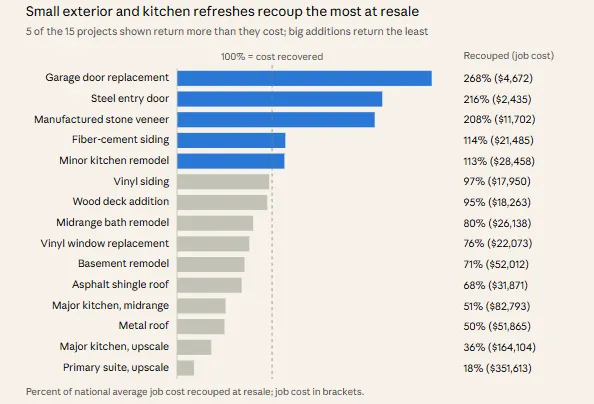
The numbers are averages, not guarantees. Local markets, finishes and timing change the result. Still, the pattern is clear: small, visible upgrades beat big-ticket additions.
1. Boost Curb Appeal First
Exterior swaps lead the report. A garage door replacement averages $4,672 and recoups 268%. A steel entry door averages $2,435 and recoups 216%. Manufactured stone veneer averages $11,702 and recoups 208%. Fiber-cement siding costs $21,485 and recoups 114%.
2. Update the Kitchen Without Gutting It
A midrange minor kitchen remodel averages $28,458 and recoups 113%. A midrange major remodel averages $82,793 and recoups 51%. An upscale major remodel averages $164,104 and recoups 36%. In short, refresh cabinets, counters and appliances before you move walls.
3. Refresh the Bathrooms
A midrange bath remodel averages $26,138 and recoups 80%. A universal-design bath averages $42,183 and recoups 61%. An upscale remodel averages $81,612 and recoups 42%. Bathrooms rarely pay for themselves in full, so keep finishes sensible.
4. Add Outdoor Living Space
A wood deck addition averages $18,263 and recoups 95%. A composite deck costs $25,096 and recoups 89%. A backyard patio averages $51,454 and recoups 46%.
5. Replace Aging Systems and Windows
Vinyl windows average $22,073 and recoup 76%. An asphalt shingle roof averages $31,871 and recoups 68%. A metal roof averages $51,865 and recoups 50%. HVAC electrification averages $19,484 and recoups 72%. These projects protect the house and cut repair risk even when resale returns look modest.
6. Finish a Basement
A basement remodel averages $52,012 and recoups 71%. It adds usable living space without changing your home’s footprint.
7. Think Twice About Big Additions
A midrange primary suite addition averages $170,517 and recoups 32%. An upscale one averages $351,613 and recoups 18%. An accessory dwelling unit averages $166,406 and recoups 41%. Build these for your own use, not for resale.
A Note on Energy Upgrades and Solar
Solar installation averages $55,937 and recoups 30%. The federal Energy Efficient Home Improvement Credit no longer applies to new work. The IRS says it covered property placed in service before December 31, 2025. Check current state and utility incentives before you buy.
3 Best Home Renovation Companies in USA
These three companies work in many states, so most US homeowners can reach them. Modernize’s best-companies list ranks Power Home Remodeling first with a 5 out of 5 rating. It gives The Home Depot Home Services 4.5 and Lowe’s 4. Each offers a different strength, so pick by project type.
The address and phone number below are each company’s corporate headquarters, as listed in business directories. Local jobs run through regional offices, stores or partner installers. Confirm your local contact on the company’s official site before you book.
Quick Comparison
| Company | Best for | Services | Modernize rating |
| Power Home Remodeling | Exterior upgrades | Windows, siding, roofing, doors, insulation | 5 / 5 |
| The Home Depot Home Services | One-stop kitchens, baths and flooring | Kitchens, baths, flooring, roofing, siding, HVAC | 4.5 / 5 |
| Lowe’s Home Improvement | Store-backed installation | Kitchens, bathrooms, flooring, roofing, windows | 4 / 5 |
1. Power Home Remodeling
Name: Power Home Remodeling (Power Home Remodeling Group)
Address: 2501 Seaport Dr, Floor 4, Chester, PA
Phone: (610) 874-5000
Website: powerhrg.com
Power focuses mainly on exterior remodeling. Wikipedia lists windows, siding, entry doors, roofing, attic insulation, gutters and solar panels. Jeff and Adam Kaliner founded the company in 1992, and it employs roughly 3,000 people, per that page. Modernize says it offers one comprehensive warranty on work by certified teams, and availability varies by state.
ConsumerAffairs reviews from early 2023 show a clear split. Customers praised professional staff, on-time installs, thorough cleanup and the lifetime warranty. They complained about window delays, installation problems and slow customer service.
Choose it if you need windows, siding or a new roof. Read the warranty terms before you sign.
2. The Home Depot Home Services
Name: The Home Depot, Inc.
Address: 2455 Paces Ferry Rd NW, Atlanta, GA 30339
Phone: (770) 433-8211
Website: homedepot.com
Home Depot’s installation program connects you with a network of certified contractors. Modernize lists kitchens, baths, flooring, roofing, siding and HVAC. It also notes that quality can vary by location and that the company advertises financing and warranty programs without detailing them.
Because materials and installation come from one place, you can price a whole project in a single visit.
Choose it if you want a kitchen, bath or flooring job with materials and labor bundled.
3. Lowe’s Home Improvement
Name: Lowe’s Companies, Inc.
Address: 1000 Lowes Blvd, Mooresville, NC 28117
Phone: (704) 758-1000
Website: lowes.com
Lowe’s offers installation for kitchens, bathrooms, flooring, roofing and windows through its stores. Modernize notes nationwide access, with installation quality and warranties varying by contractor.
Choose it if you prefer a store-backed purchase with local installers and want to compare quotes against Home Depot.
Step-by-Step Home Renovation Checklist
Follow these phases in order. Each phase protects the next, so skipping ahead usually costs money. Local codes and project type change the details, so treat this as a general sequence.
Phase 1: Plan and Budget
- Write down your goals: more space, lower upkeep, resale value or comfort.
- Get a current home value estimate.
- Set a total budget and compare it with the 30% rule.
- Add a 10% to 20% contingency fund.
- Rank projects by need first: safety, water, structure, systems, then looks.
- Decide how you will pay: cash, savings, home equity loan or HELOC. Remember that your home secures an equity loan.
Phase 2: Hire and Permit
- Collect three written, itemized bids.
- Verify the contractor’s license and insurance.
- Review the contract: scope, schedule, payment stages, change orders and warranty.
- Confirm who applies for permits, then check local permit requirements.
- Plan where you will live during noisy or dusty work.
Phase 3: Prepare the Site
- Clear and protect furniture, floors and belongings.
- Set up a dust barrier and a temporary kitchen if needed.
- Test for lead paint or asbestos in older homes before demolition.
- Order long-lead items early, such as windows and cabinets.
Phase 4: Structure and Exterior
- Complete demolition and any structural work.
- Repair the roof, foundation and water problems first.
- Install windows and exterior doors to make the house weather-tight.
Phase 5: Systems Behind the Walls
- Finish rough plumbing, electrical and HVAC.
- Pass required inspections before you close the walls.
- Add insulation.
Phase 6: Interior Finishes
- Hang and finish drywall.
- Prime and paint walls and ceilings.
- Install flooring.
- Set cabinets, then countertops.
- Add tile, fixtures, lighting and appliances.
- Install trim and do final paint touch-ups.
Phase 7: Finish and Close Out
- Walk the site and make a punch list.
- Confirm the contractor fixes every item before final payment.
- Collect warranties, manuals, final inspection records and lien waivers.
- Save receipts and invoices for improvements. They may matter when you sell.
In What Order Should You Renovate a House?
Work from the outside in and from the structure out to the surface. Fix safety, water and structure first. Then handle exterior shell, systems, interior surfaces and finally cosmetic touches. This order keeps new finishes from getting damaged by later work.
Frequently Asked Questions
What is the 30% rule for renovations?
The rule says to keep total renovation spending at or below 30% of your home’s current value. A $400,000 home yields a $120,000 limit. It is a guideline, not a law.
What is the difference between remodeling and renovating a house?
Renovating refreshes what exists, such as new paint or flooring. Remodeling changes a space’s layout or function, such as moving walls or enlarging a kitchen.
Is $50,000 enough to renovate a house?
It depends on scope. Using 2025 national averages from Cost vs Value, a midrange minor kitchen ($28,458), a steel entry door ($2,435) and a new garage door ($4,672) total $35,565. That leaves about $14,400 for contingency and permits. A full house renovation costs far more.
Is $100,000 enough to renovate a house?
It covers a focused list, not a full gut. Keep $15,000 as contingency, which leaves $85,000. A minor kitchen ($28,458), midrange bath ($26,138), fiber-cement siding ($21,485), steel entry door ($2,435) and garage door ($4,672) total $83,188 at national averages. Local prices run higher or lower.
What does a $100K home renovation look like?
In approx. $85K updates the kitchen, one bathroom and the exterior. At national average ratios, that spending recoups about $95,300 at resale, or 115%. Real results depend on your market.
What is a realistic budget for renovations?
Price each project from the table above, then add 10% to 20% for surprises. Compare the total with 30% of your home’s value. Trim the list if it runs over.
Can I renovate my kitchen for $30,000?
Yes, for a minor remodel. A midrange minor kitchen remodel averages $28,458 nationally. A major midrange remodel averages $82,793, so $30,000 will not cover moving walls or replacing every system.
Can I renovate my bathroom for $10,000?
Only for light updates. A midrange bath remodel averages $26,138, so $10,000 stretches to a new vanity, fixtures, paint and lighting. A full gut rarely fits that budget.
What is the most expensive part of a house to remodel?
Among projects in the 2025 report, an upscale primary suite addition costs the most at $351,613. An accessory dwelling unit averages $166,406, and an upscale major kitchen averages $164,104. Among everyday projects, kitchens usually cost the most.
Does renovating a home increase its value?
Often, but rarely dollar for dollar. Only five of the 28 projects in the 2025 report recouped more than their cost: garage doors, steel entry doors, stone veneer, fiber-cement siding and a midrange minor kitchen remodel.
How can I increase home value by $50,000?
Focus on the best performers. A midrange minor kitchen ($28,458), steel entry door ($2,435) and garage door ($4,672) cost $35,565 and recoup about $49,900 at national average ratios, or 140%. The doors return over 200% each, but you can only replace each once. Gains vary by neighborhood.
How can I increase home value by $100K?
At national averages, expect to spend about $85,000 to $90,000 on high-return projects to see $100,000 in added value. Few homes have that many cheap wins, so also fix deferred maintenance and compare neighborhood sales. Get a local appraisal or agent opinion first.
At what point is it not worth remodeling a house?
Reconsider when costs pass 30% of the home’s value, when repairs approach the price of a comparable home, or when you would over-improve for the neighborhood. Large additions in the report recoup only 18% to 41%.
Is it cheaper to completely remodel or build new?
Remodeling usually costs less when the foundation and frame are sound. Building new can win when major structural, foundation or system problems exist. Get written estimates for both before you decide.
What does Dave Ramsey say about home renovations?
A Motley Fool summary lists four tips: do one project at a time, save and pay cash for big projects, do simple repairs yourself, and barter skills for work. It advises leaving structural and electrical work to professionals.
Can I deduct house renovations on my taxes?
Generally no, not as a yearly deduction on a personal home. Capital improvements instead raise your cost basis, which can reduce taxable profit when you sell, according to CNBC. Single filers can exclude up to $250,000 of gain and married couples up to $500,000, if they meet the rules. Routine repairs do not count. The federal Energy Efficient Home Improvement Credit applied only to property placed in service before December 31, 2025, per the IRS. This is general information, not tax advice. Ask a tax professional.
What are the biggest renovation mistakes?
Homeowners most often skip the contingency fund, hire on the lowest bid, start without permits, change plans mid-project and ignore water or structural problems. Over-improving beyond neighborhood prices also hurts returns.
In what order should you renovate a house?
Start with safety, water and structure. Then work on the exterior shell, systems behind the walls, interior surfaces and finally finishes. The checklist above shows each phase.