Best Places to visit in Iceland | Unmissable Stops, Region by Region
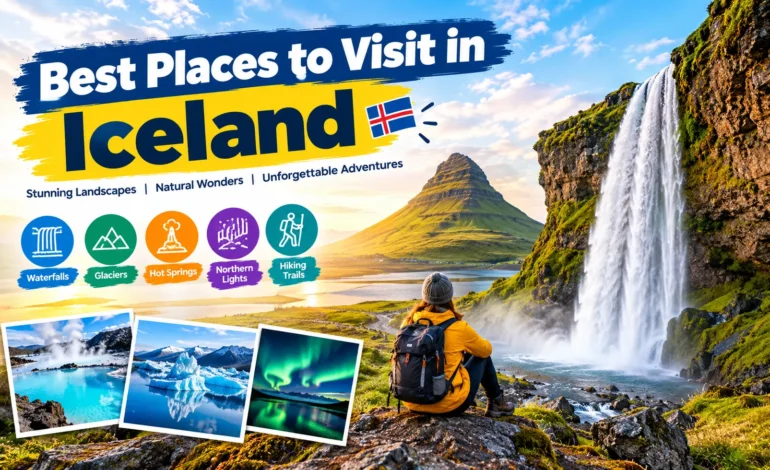
Iceland packs more drama into one island than most countries manage in a continent. For instance, glaciers crawl toward black-sand beaches. Geysers erupt beside quiet green valleys. Meanwhile, volcanoes still reshape the land. Indeed, few destinations feel so alive.
This guide covers the best places to visit in Iceland, region by region. Moreover, it gives you real distances, seasonal advice, and safety rules. You will learn where to go, when to go, and how to avoid costly mistakes. In addition, you will find a sample route for several trip lengths.
Every distance below starts from Reykjavik. Therefore, you can plan each day with confidence. Fortunately, the island is compact, and the main sights sit along one loop road.
Best Places to Visit in Iceland at a Glance
- Thingvellir National Park: about 47 km, a UNESCO site with rift valleys
- Gullfoss Waterfall: about 116 km, a two-tiered giant on the Golden Circle
- Seljalandsfoss: about 130 km, a waterfall you can walk behind
- Skogafoss: about 150 km, a wide falls with a staircase to the top
- Reynisfjara Beach: about 185 km, basalt columns and black sand
- Vatnajokull National Park: about 320 km, Europe’s largest glacier area
- Jokulsarlon Glacier Lagoon: about 380 km, floating icebergs
- Lake Myvatn: about 480 km, lava fields and mud pots
- Kirkjufell Mountain: about 185 km, Iceland’s most photographed peak
- Blue Lagoon: about 50 km, a geothermal spa near the airport
The Golden Circle: Iceland’s Classic First Taste
The Golden Circle is the most popular route on the island. It covers about 230 km and takes six to eight hours. As a result, it fits neatly into a single day trip from the capital.
The loop links three headline stops. First comes Thingvellir National Park. Next, you reach the Geysir geothermal area. Finally, you arrive at Gullfoss waterfall. Together, they show tectonic rifts, hot springs, and thundering water in one route.
Thingvellir National Park
Thingvellir sits just 47 km from Reykjavik. In fact, it earns its UNESCO status twice over. Geologically, it marks the rift where two tectonic plates drift apart. Historically, it hosted Iceland’s first parliament. You can walk between the plates along well-kept paths.
Adventurous travelers can also snorkel in Silfra, a crystal-clear fissure. Admittedly, the water stays cold all year. Nevertheless, the visibility is extraordinary.
Geysir and Strokkur
The Geysir area lies on the loop’s second leg. Its famous namesake rarely erupts now. However, its neighbor Strokkur blasts hot water into the air every few minutes. Therefore, you rarely wait long for a show.
For safety, walk the marked paths and stay clear of the boiling pools. Surfaces near the vents can burn skin instantly.
Gullfoss Waterfall
Gullfoss lies about 116 km from the capital. The river drops in two tiers into a narrow canyon. Besides, sunny days often bring rainbows over the spray. In winter, ice sculptures frame the edges.
Well-maintained paths lead to several viewpoints. Wear waterproof layers, because the mist soaks everything nearby.
Easy Add-Ons
Many travelers extend the loop with a few extra stops. Kerid Crater offers a colorful volcanic lake. The Secret Lagoon gives a quieter hot-spring soak. Besides these, snorkeling in Silfra adds a memorable twist.
The South Coast: Waterfalls, Glaciers, and Black Sand
The South Coast delivers the best scenery per kilometer in Iceland. Highway 1 runs along it, so driving feels easy. Moreover, every stop sits close to the road.
Seljalandsfoss
Seljalandsfoss lies about 130 km from Reykjavik. A path circles behind the falling water. Consequently, you can watch the curtain from inside. Still, expect to get wet, so bring a rain jacket.
Skogafoss
Skogafoss sits about 150 km out. Notably, it spans a wide cliff and roars with power. A staircase climbs to a viewing platform above the edge. From there, a hiking trail continues up the river valley.
Reynisfjara Black Sand Beach
Reynisfjara lies near the village of Vik, about 185 km away. Basalt columns and sea stacks frame the shore. The scene looks unreal, yet it hides real danger.
Sneaker waves surge far up the sand without warning. They have caused deaths. Therefore, read the warning signs and watch the light system. Above all, stay well back from the water at all times. If you want a calmer option, try nearby Vikurfjara.
Dyrholaey and the Puffins
Dyrholaey is a rocky headland with sweeping coastal views. Also, puffins nest here in summer. Typically, you can spot them from late April to early September.
Solheimajokull Glacier
Solheimajokull is an outlet glacier you can reach by a short walk. Guided hikes use crampons and ice axes. For safety, never walk on the ice without a certified guide.
Southeast Iceland: Vatnajokull and Jokulsarlon
Southeast Iceland feels wilder than the South Coast. Distances grow longer, and the crowds thin out. As a result, many travelers call this stretch their trip highlight.
Vatnajokull National Park
Vatnajokull covers nearly 15% of the country. It sits about 320 km from the capital. Skaftafell serves as the main gateway. From there, you can join glacier hikes or walk to Svartifoss, a waterfall ringed by basalt columns.
Therefore, book guided tours early in summer. Spaces fill fast.
Jokulsarlon Glacier Lagoon
Jokulsarlon lies roughly 380 km from Reykjavik. That drive takes five to six hours. Nevertheless, the reward justifies the effort. Icebergs drift across a still lagoon and glow blue under shifting light.
Boat tours run roughly from spring through fall. In winter, guides lead ice cave tours instead. Seals sometimes rest on the floating ice, so keep your camera ready.
Diamond Beach
Diamond Beach lies just across the road from the lagoon. Icebergs wash onto the black sand and sparkle like gems. Ideally, visit at sunrise for the softest light and the fewest people.
Snaefellsnes Peninsula: Iceland in Miniature
Locals often call Snaefellsnes a small version of the whole country. It packs lava fields, fishing villages, volcanoes, and dramatic coastline into one peninsula. In addition, it sits only a few hours from the capital.
Kirkjufell Mountain
Kirkjufell stands about 185 km away, near the town of Grundarfjordur. Many people call it the most photographed mountain in Iceland. A nearby waterfall adds the classic foreground. Better yet, come at dusk, or in winter under the northern lights.
Arnarstapi and the Coast
Arnarstapi is a tiny village on the southern shore. A coastal trail links it to Hellnar through sea arches and bird cliffs. Overall, the walk takes about an hour and feels effortless.
North Iceland: Myvatn, Dettifoss, and Husavik
North Iceland rewards travelers who go the extra distance. The region feels quieter and more rugged. Furthermore, it offers some of the best wildlife viewing in the country.
Lake Myvatn
Lake Myvatn lies about 480 km from the capital. The drive takes six to seven hours. Along the shore, you find lava formations, mud pots, and volcanic craters. Meanwhile, steam rises from the ground in several spots.
For a quieter soak, visit Myvatn’s geothermal spa. It offers a calmer alternative to the Blue Lagoon.
Dettifoss
Dettifoss thunders through Jokulsargljufur National Park. It ranks among the most powerful waterfalls in Europe. Here, spray hangs in the air, and the ground trembles underfoot. Treat the edges with respect, since the rocks stay slick.
Husavik and Akureyri
Husavik is a classic base for whale watching. Tours run year-round. However, summer offers the best chances. Meanwhile, Akureyri serves as the north’s lively hub, with cafes, museums, and a botanical garden.
Best Time to Visit Iceland
Each season offers something different. Choose based on what you want to see.
- Summer (June to August). The midnight sun lights the sky almost all night. Moreover, roads and Highlands open fully. Puffins and whales appear in force. Also, the weather stays most stable.
- Autumn (September to October). Meanwhile, crowds shrink. The northern lights return from September. In addition, autumn colors brighten the valleys.
- Winter (November to March). Short days bring long aurora nights. Ice caves open for guided tours. Prices fall, yet road closures grow more common. Notably, the best aurora chances come from late February to late March and in October and November.
- Spring (April to May). Daylight stretches fast. Puffins arrive in late April. Moreover, May is a quiet shoulder month with fewer crowds.
Top Activities Across the Island
- Chase the northern lights. The season runs from September to April. Pick dark, clear nights away from city glow.
- Soak in hot springs. Try the Blue Lagoon, Myvatn’s spa, or the Secret Lagoon.
- Drive the Ring Road. The full loop covers about 1,300 km and usually takes seven to ten days.
- Explore ice caves. Most tours run October to April. Katla Ice Cave stays open year-round.
- Hike a glacier. Skaftafell and Solheimajokull offer guided options.
- Go whale watching. Tours run year-round from Husavik, Reykjavik, and Akureyri.
- Ride Icelandic horses. Tours include rides along black-sand beaches.
- Spot reindeer. Specialized super jeep tours head into the Eastfjords.
10 Days Itineraries for Iceland Visitors
3 Days: Reykjavik, Golden Circle, and South Coast
On day one, explore Reykjavik and relax at the Blue Lagoon. Next, spend day two on the Golden Circle. Finally, drive the South Coast on day three, stopping at both big waterfalls and Reynisfjara.
5 Days: Add Glaciers and Snaefellsnes
Start with the three-day plan above. Then push on to Jokulsarlon and Diamond Beach. Afterward, return along the coast and spend a day on Snaefellsnes. Consequently, you see ice, fire, and fishing villages in one trip.
10 Days: The Full Ring Road
Then, drive the entire 1,300 km loop. Spend two nights in the southeast, two near Myvatn, and one in Akureyri. Furthermore, add Snaefellsnes at the end. This route shows nearly every highlight.
Practical Travel Tips for Iceland
Entry Requirements
Visitors from visa-exempt countries can stay up to 90 days in any 180-day period. That limit covers all Schengen countries combined. Your passport needs three months of validity after departure. In addition, it must have been issued within the last ten years. Other nationalities need a Schengen visa.
Iceland joined the Schengen area in 2001. The Entry/Exit System has been fully operational since April 2026. First-time entrants give fingerprints and a photo at the border. ETIAS has not launched yet, and 2027 now looks most likely. Always confirm current rules on official government sites before you fly.
Money
Iceland uses the Icelandic krona, not the euro. The country is almost entirely cashless. Fortunately, cards work nearly everywhere, including fuel pumps. However, unmanned stations may need a PIN-chip card.
Driving Rules
First, drive on the right. Speed limits run 50 km/h in towns, 90 km/h on paved rural roads, and 80 km/h on gravel. Also, headlights must stay on at all times. The alcohol limit is effectively zero. Moreover, off-road driving is illegal and carries heavy fines.
Watch for one-lane bridges, where the first car to arrive has priority. Likewise, sheep roam freely. Strong winds can rip car doors off their hinges, so hold the door firmly. A per-kilometer road tax began on January 1, 2026. Rental companies usually handle it.
Check road.is before every drive. Renters must be at least 20 years old.
Safety Tips
Dial 112 in an emergency. The 112 app can share your GPS location. This feature helps most in remote areas. Buy travel insurance with strong evacuation cover, since helicopter rescues cost a fortune.
Weather, remote roads, and glaciers pose the main risks. Fortunately, violent crime stays very rare. Check weather and alerts daily.
Hot Spring Etiquette
Shower without a swimsuit before you enter any pool. Locals take this rule seriously. Tap water is safe to drink, including the hot water, which may smell faintly of sulfur.
What to Pack for Iceland Trip?
- Waterproof jacket and rain pants
- Warm base layers, even in summer
- Sturdy hiking boots with good grip
- Swimsuit for hot springs
- Sleep mask for midnight sun nights
- Power bank and reusable water bottle
- Sunglasses for low winter sun
Overall, layers matter most. The weather can change several times in one hour.
Common Mistakes to Avoid
- Packing too much into each day. Distances look short, yet stops take time.
- Ignoring road and weather alerts. Conditions shift quickly.
- Skipping insurance. Rescues cost far more than a policy.
- Trusting a rental car on F-roads. Only 4WD vehicles may enter.
- Getting too close to the waves. Sneaker waves kill visitors every year.
- Forgetting to book ahead. Popular tours and lagoons sell out.
Frequently Asked Questions
What are the best places to visit in Iceland for first-timers?
Start with the Golden Circle, the South Coast, and the Blue Lagoon. Add Jokulsarlon if you have extra days.
How many days do you need in Iceland?
Five days cover the highlights of the southwest. A full Ring Road trip needs seven to ten days.
When is the best time to visit Iceland?
Summer offers the midnight sun and full road access. Winter offers aurora and ice caves.
Is Iceland expensive?
Yes, costs run high for food, fuel, and lodging. Self-catering and off-season travel help.
Do I need a 4WD in Iceland?
Only for F-roads in the Highlands. Paved routes work fine with a standard car.
Can I see the northern lights in summer?
No. The season runs from September to April.
Is Iceland safe for tourists?
Crime stays very low. Nature poses the real risks, so follow signs and guidance.